How martial arts stories become martial arts history
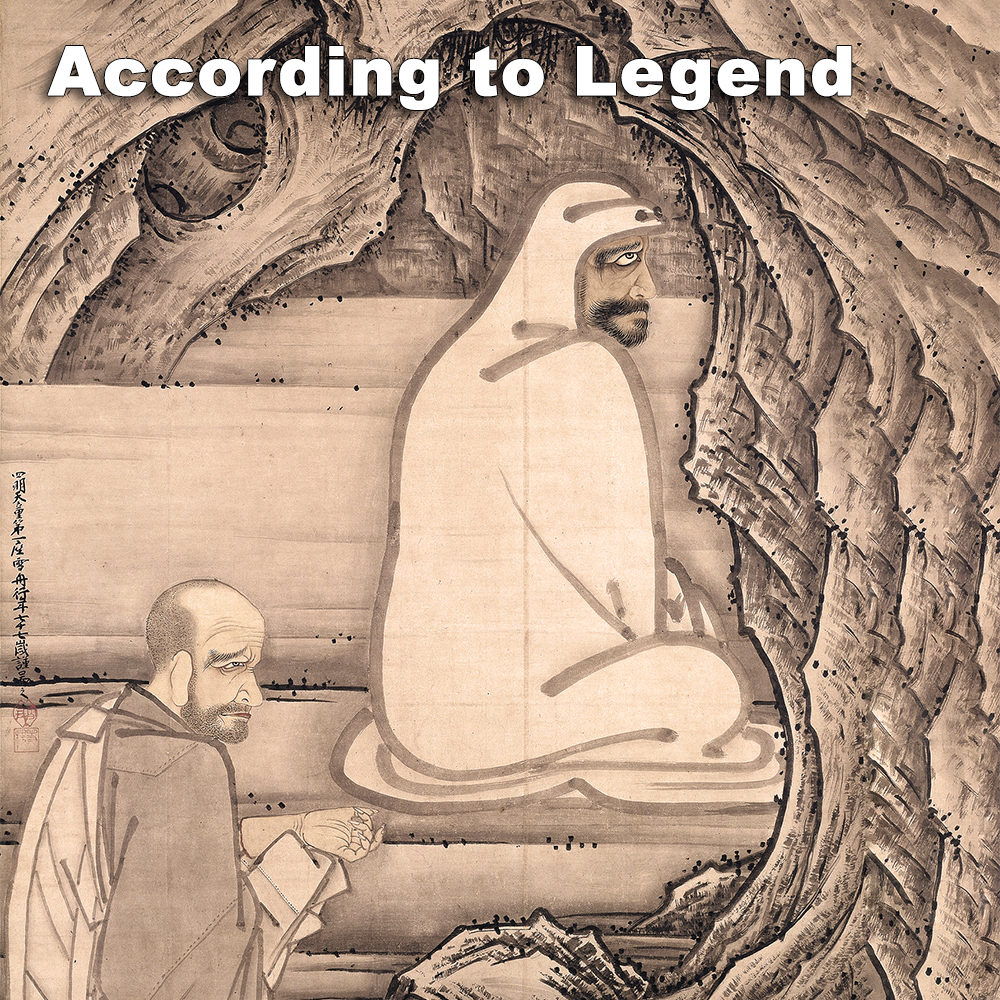
I remember this picture very clearly. Bodhidharma sitting in a cave, staring at the wall. I first saw it in The Way of the Warrior in the early 1980s, the book by Howard Reid and Michael Croucher that accompanied the BBC television series.
I also remembered something rather extraordinary about Bodhidharma being able to hear the ants scream. After more than forty years I wasn’t entirely sure whether I had remembered that correctly, so I went back and checked.
I had.
The caption begins, “According to legend,” and goes on to say that Bodhidharma spent nine years looking at a cave wall, “listening to the ants scream.”
What I had forgotten were those first three words: According to legend.
Perhaps that is the more interesting part.
The book wasn’t presenting the story as established historical fact. It actually told me quite plainly that it was a legend. Yet after all these years, what remained in my memory was Bodhidharma, the cave, nine years staring at the wall and, most memorably of all, the screaming ants. The qualification had quietly disappeared.
When I began training in the 1970s, information was relatively difficult to come by. There was no internet, no instant access to old texts, translated documents, academic papers or competing historical accounts. You learned from your instructor, bought whatever books you could find and read the martial arts magazines. Occasionally something appeared on television, and a series such as The Way of the Warrior was a major event for anyone interested in martial arts.
Stories about Bodhidharma and Shaolin were part of that landscape. The familiar account had Bodhidharma traveling from India to China, arriving at Shaolin and somehow becoming connected with the physical training of the monks. Exactly how much of that is history, how much is later tradition and how much was added along the way is less important here than the simple fact that the story stayed with me.
That made me wonder how often the same thing happens elsewhere in the martial arts. We inherit stories about kata, old teachers, applications, methods and origins, and after enough time it can become difficult to separate what was actually recorded from what was simply repeated.
How do we know?
Martial arts history has gaps. There are things we can trace reasonably well and others that become increasingly uncertain the further back we go. Much was passed directly from teacher to student, sometimes from father to son or among a small group of close students, leaving little written record behind.
That doesn’t mean we should stop exploring where the record becomes unclear. Quite the opposite. Instructors and practitioners still have to examine, test and work things out for themselves. The important distinction is between saying, “This is what I think works here,” and saying, “This is what they originally meant.”
In those gaps, explanation has a habit of becoming tradition, and tradition can eventually acquire the weight of fact.
We now have almost the opposite problem from the one we had when I started training. Back then, information was scarce. Today we are surrounded by it. A claim can appear online, be copied elsewhere, repeated in a video and shared again on social media. Seeing the same thing in several places can give the impression that several sources support it, when they may all lead back to exactly the same place.
Fortunately, we also have access now to far better historical research than we did when I began training. There are researchers who have spent years working through old texts, translations, documents and surviving records rather than simply repeating what was already being said. That doesn’t mean every question has been settled, but it does mean we can often distinguish much more clearly between evidence, interpretation and folklore.
I would rather follow the evidence as far as it takes us and leave the rest open than fill the gaps with a story simply because it has been repeated for a long time.
The old stories still have value. Some are fascinating, and they are part of the culture that was handed down to us.
But history and tradition are not quite the same thing.
Help Keep Applied Methods Free
Applied Methods is independently written and freely available. If you enjoy the articles and would like to support the continued writing and upkeep of the site, contributions are always appreciated, but never expected.