Applied Methods is a place for writing about karate, training, self-protection, teaching, and the lessons that come from long-term practice.
Much of what I write comes from looking again at things we often take for granted. Sometimes that means questioning familiar methods or explanations. At other times it means returning to something I have practiced for years and seeing it differently because experience has changed the way I understand it.
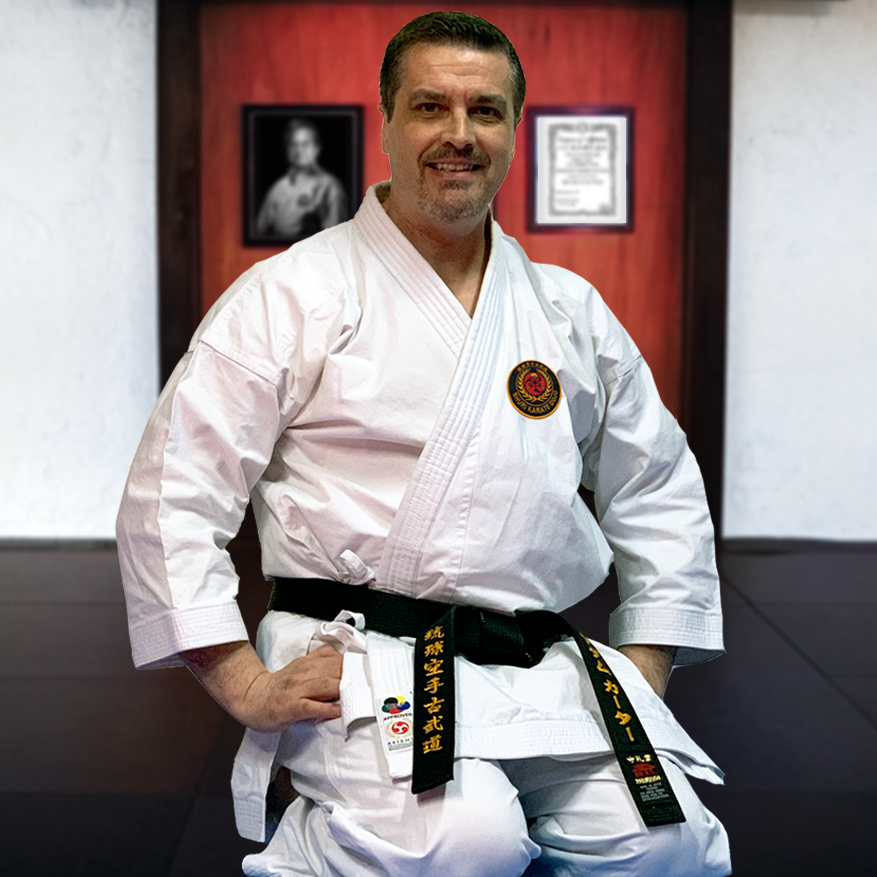
I’m Adam Carter, an 8th Dan karate practitioner and instructor who holds the title Hanshi. I am also the founder and senior instructor of Shuri Dojo, through which some readers may already know my work. My training began in the 1970s, and I have now spent more than five decades practicing, teaching, competing, studying, and continuing to question what we do and why we do it.
Over those years I have trained in several different approaches to karate and martial arts. My own practice has gradually moved toward a more practical understanding of karate, particularly kata application, close-range movement, self-protection, and the way traditional methods can be explored rather than simply repeated.
Teaching has been a large part of that journey too. I have taught karate for many years and have also taught practical self-protection to people from a wide range of backgrounds. That experience has continually reinforced something I consider important: knowing how to perform something is not necessarily the same as understanding it.
Applied Methods reflects that process.
It is not intended to present one final answer or insist that everyone should practice in the same way. I am more interested in looking at familiar ideas again and asking whether what we do still serves the purpose we believe it does.
Some articles are directly about karate. Others move into teaching, experience, self-protection, tradition, or the way our understanding changes over time. The subjects may vary, but they usually come back to the same thing: what are we actually trying to achieve, and does the method help us get there?
After more than fifty years, I am still learning, still changing my mind about things, and still finding questions worth exploring.
That is what Applied Methods is really about.
If that approach is of interest, you are welcome to read, subscribe, and follow along.
Interested in following Applied Methods?
New articles and Notes are published regularly.