
On honesty, experience, and the responsibility that comes with teaching
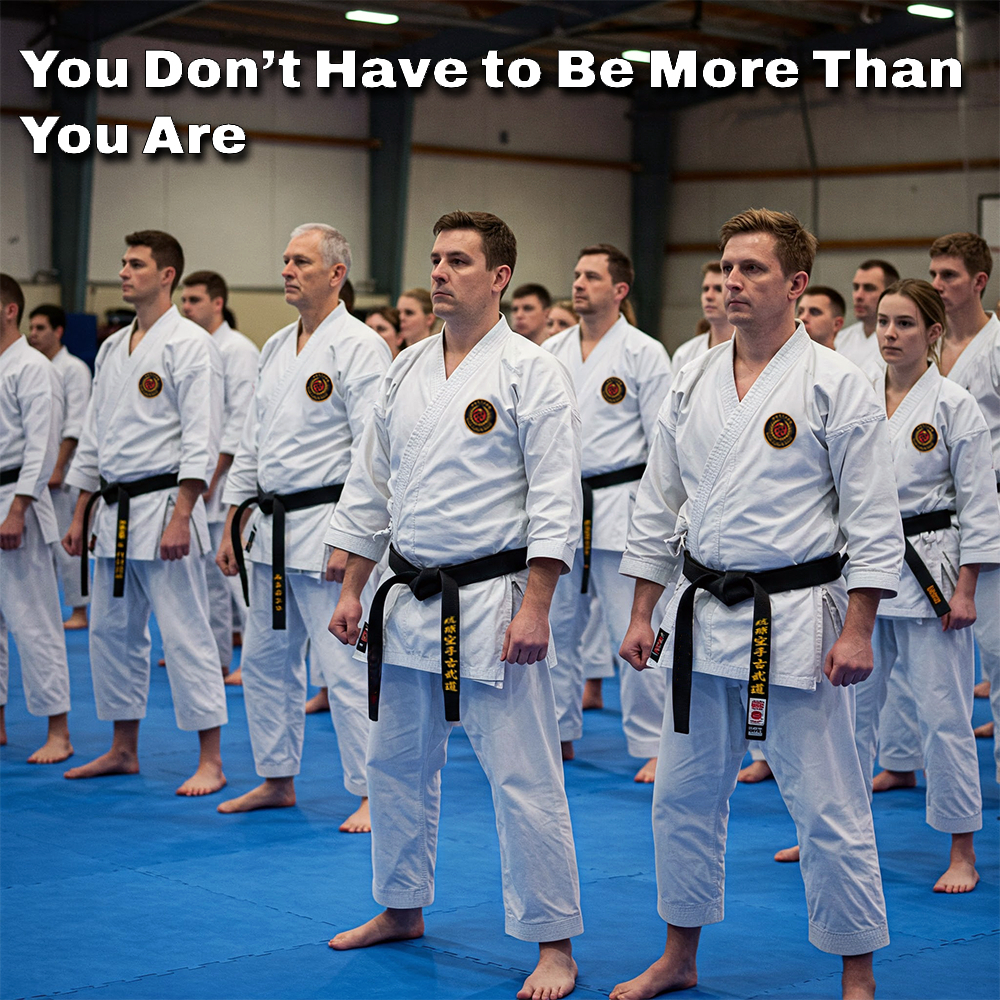
Over the years, I have written quite strongly about fake martial arts instructors.
It still bothers me. Perhaps just as much.
A martial arts teacher does not have to be exceptional. They do not need a glamorous background, an impressive professional history, or a collection of titles after their name.
They do, however, need to be honest about what they know, what they have experienced, and what they are genuinely qualified to teach.
That seems like a very simple standard.
For many years in the UK, I never thought I needed to present myself as anything more than I was. I taught karate, tried to teach it well, and let the dojo stand or fall on what people experienced when they walked through the door.
That was largely how my dojo grew. It was not because of clever advertising, an impressive website, or carefully constructed claims about who I was. It was not a commercial dojo, I had a full-time job, and students came, they trained, and some of them told other people about their experience. At its largest, that one dojo had close to sixty students.
I don’t mention that because numbers prove quality. They don’t. But there is something to be said for allowing reputation to follow the work, rather than creating the reputation first and hoping the work eventually justifies it.
Perhaps that is the part that has always bothered me.
Many people search out a martial arts class looking for some kind of protection, whether that is physical or simply the confidence that comes from feeling more capable.
A beginner may not know which questions to ask, and they are often the people least able to judge the competence of the person standing in front of them.
If you have never trained before, how do you know what a good fifth dan should look like? How do you know whether a self-defense drill is realistic, or whether the instructor genuinely understands pressure, resistance, violence, or conflict?
Usually, you don’t.
You trust.
And I think that is where the responsibility changes.
The moment we become teachers, people begin placing a degree of trust in us. They trust that the history we tell them is reasonably accurate, that the rank we display means something, and that the experience we claim is genuine.
More importantly, they trust that when we teach something, we actually understand it.
And that is precisely the problem. A beginner usually has no reliable way of knowing whether we do.
They cannot easily distinguish genuine experience from overconfidence, borrowed knowledge, or a collection of techniques delivered convincingly. In many cases, they will only discover the difference after considerable time has passed.
That is why the greater responsibility has to rest with the instructor.
If we have no meaningful experience of something, we should be extremely careful about presenting ourselves as qualified to teach it.
That distinction becomes particularly important when self-protection enters the conversation.
If that understanding has never extended beyond compliant dojo practice, formal drills, books, seminars, or videos, then I think the instructor has to ask a difficult question.
Should I really be teaching this?
Knowledge matters, but experience matters too. There is also nothing shameful about saying, “That is outside my experience.” In fact, I think that is one of the signs of a responsible teacher.
None of us knows everything.
A good teacher should be able to say where their competence ends without feeling that their authority has somehow been diminished. Rein in that expanding ego.
The problem begins when appearing knowledgeable becomes more important than actually being knowledgeable.
Poor karate may waste someone’s time. But poor self-protection instruction can do considerably more than that.
This is why honesty matters more to me than titles ever have. Rank alone does not settle the question. Nor does lineage, legacy, the number of certificates on the wall, or how impressive someone’s biography appears.
Of course, the people who most need to consider any of this may be the least likely to do so.
Someone who has become comfortable exaggerating their experience, inflating their qualifications, or presenting themselves as something they are not is unlikely to read an article like this and suddenly reconsider their teaching. In many cases, they may not see a problem at all. The image has become more important than the truth behind it.
Perhaps that is why the rest of us still have a responsibility too, to maintain standards and to be careful about what we accept simply because it is presented confidently.
Eventually, the work has to stand on its own.
You do not have to be extraordinary to be a good teacher. But you should be truthful about what you know, what you have done, and where your experience ends.
And perhaps, above all, you should only teach what you genuinely understand well enough to take responsibility for.
Reputation should follow the work.
Help Keep Applied Methods Free
Applied Methods is independently written and freely available. If you enjoy the articles and would like to support the continued writing and upkeep of the site, contributions are always appreciated, but never expected.
Your articles are always food for thought
Thank you I appreciate your support.
As always thought-provoking observations.
As an instructor I take this responsibility very seriously as we all should. It is the reason that I’m always searching for function in our movements that I/they can use as a matter of instinctual response. But the reality for me is that I’ve only had a couple of occasions where I’ve had to use much if any of the physicality of what I/we explore in the Dojang. I’m honest with myself and my students about this.
Hopefully my students will enjoy the same experience -which will be a tick in my and their book for ‘self’ and ‘situational’ awareness quotient.
To the questions of whether or not I’m qualified or should be doing this instruction? From time to time ‘imposter syndrome’ always creeps through ones mind.
My rationale and that which I encourage my students to adopt is that by physically exploring & ‘asking the question of yourself’ during partner training and in the context of combative principles and biomechanics ‘hidden’ in our solo pattern movements we build understanding of the nature of close combat. However, recognise this as a pursuit of understanding and acquiring some physical skills which will not necessarily transfer to any more certainty of outcome if a real-life situation turns violent – It does though, increase awareness of the risks and possibilities and potentially provide some tools that we would not otherwise have.
As always avoiding physical violence is the first option.
If physicality is unavoidable the ethos I like is contained in a quote (I think from an Okinawan?) that I unfortunately an unable to attribute to the individual.
“Don’t Lose – In doing so avoid your aggressor becoming a criminal and, in the process, avoid becoming one yourself”
Thank you for your ongoing insights.
Kind Regards
Nick
Thank you, Nick. I think the honesty you describe about the limits of our own experience is exactly the point. We can explore, test, question and try to understand what we practice, but we should also be clear with students about what that understanding does, and does not, represent. All the best.