
Why these so-called beginners’ kata may deserve a much deeper look
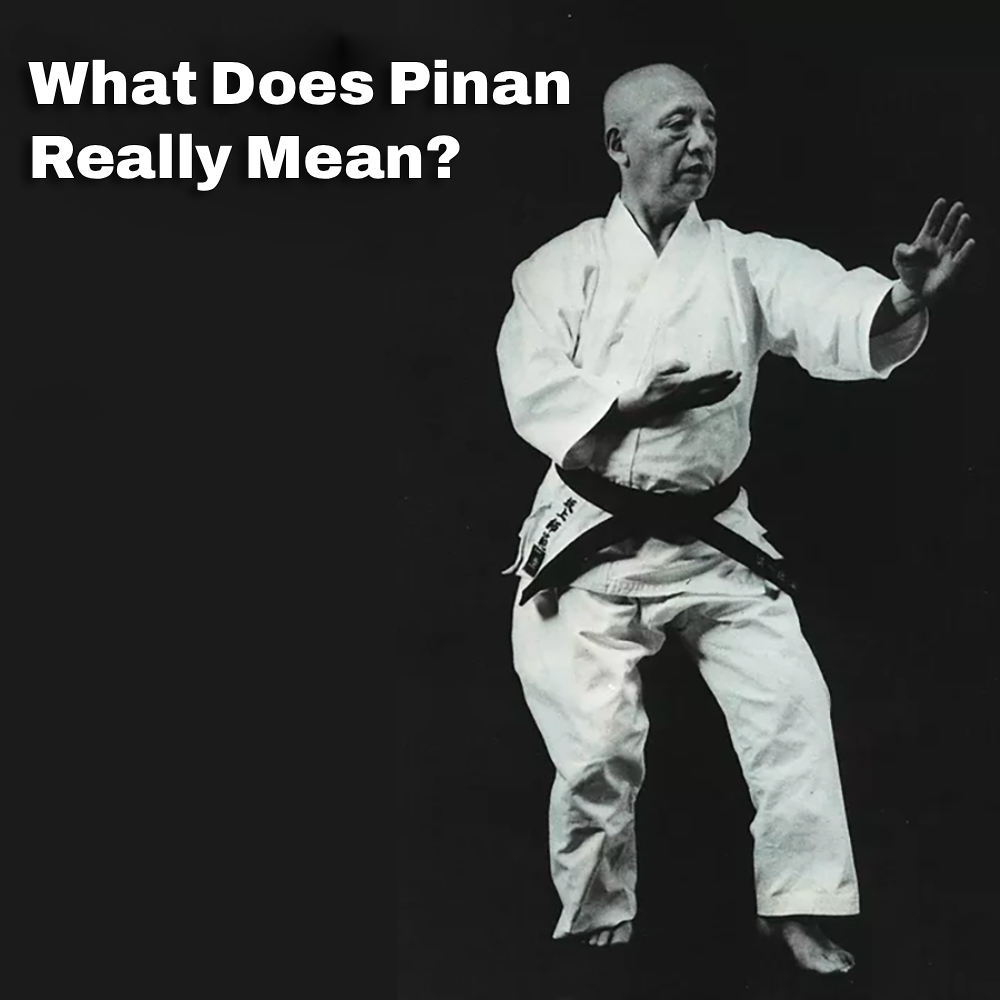
The Pinan/Heian kata, Shodan through Godan, are among the most widely practiced kata in karate.
They are generally attributed to Anko Itosu, who played a major role in introducing karate into the Okinawan school system during the early twentieth century. What is less certain is exactly where the material in the Pinan kata came from.
There are obvious connections with older kata, particularly Kusanku, and Channan is often mentioned in accounts concerning their development. Other influences have also been suggested.
Because the Pinan are often introduced early in a student’s training, they are sometimes regarded simply as beginners’ kata. I think that seriously underestimates them. They may be suitable for introducing fundamental movements and principles, but that does not mean the material they contain is basic. Like many kata, they can be studied at very different levels, and their apparent simplicity can hide considerable depth.
I was once told by a 5th Dan, who was junior to me in both rank and experience, that once a student has learned an older kata such as Kusanku, there is little reason to continue practicing the Pinan because much of the same material is already present.
I disagreed.
If the Pinan were influenced by older kata such as Kusanku, then it is reasonable to expect some of the same movements and principles to appear in both. But that does not necessarily make the Pinan redundant.
Their value may lie in the way that material was selected, reorganized and emphasized. A principle can appear in more than one kata without becoming unnecessary, just as the same principle can be practiced through different drills without one making the other obsolete.
Nor do I believe that learning a supposedly more advanced kata makes an earlier one disposable. The Pinan may be introduced relatively early, but that does not mean their study should end there. As our understanding develops, we can return to the same kata and see considerably more than we did when we first learned them.
What we can say with much greater confidence is that Itosu reorganized and systematized karate for teaching to larger groups, including schoolchildren. That alone represented a considerable change from the older model of more personal instruction.
It is often claimed that Itosu deliberately removed dangerous techniques from the kata, changed strikes into blocks, or disguised the true applications so that children would not be taught the more combative aspects of karate.
I am not convinced that we have enough historical evidence to say that with any certainty.
It seems more reasonable to me that, as karate became a form of group physical education, the way it was taught inevitably changed. Movements had to be standardized, terminology became simplified, and explanations that worked easily in a large class gradually became established.
Over time, this may have influenced how the movements themselves were understood.
A movement labelled as a block, for example, tends to be practiced as a block. Once that interpretation becomes established, people often stop looking any further.
Yet many movements found within kata can make much more sense when viewed in the context of close-range physical confrontation.
What appears to be a block may also strike, control a limb, clear an obstruction, manipulate posture, create an opening or assist with a throw or takedown.
The movement itself has not changed.
Only the interpretation has.
This is one of the reasons I believe kata should not be approached simply as a sequence of defensive blocks followed by counter-punches. When studied more deeply, they contain principles of striking, gripping, controlling, unbalancing and manipulating another person at close range.
The Pinan kata are no exception.
There is also another aspect of the Pinan that I have always found particularly interesting, and that is the name itself.
The characters used for Pinan are: 平安
They are commonly translated in karate as something like “peaceful mind” or “tranquil mind”.
But there is no character for “mind” in the term.
The same characters in Chinese are pronounced píng’ān, and the meaning commonly includes being safe, secure, unharmed or protected from danger.
That immediately gives the name a rather different feel.
I would be cautious about claiming that we know exactly what Itosu intended when the name was adopted. We simply do not have enough evidence to state with certainty that he deliberately named the kata as a description of their combative purpose.
But the meaning is nevertheless interesting.
Perhaps “Pinan” is better understood in a much more practical sense.
To remain safe, or come through danger unharmed. To protect yourself.
Whether that was precisely what Itosu intended or not, it is an interpretation that sits remarkably well with the material contained within the kata.
There is a great deal in the Pinan kata that can be explored in relation to being grabbed, struck, pushed, restrained or attacked at close range.
Perhaps that is the more useful way to look at them.
Not as collections of blocks and punches.
But as structured records of combative movements and principles which, when studied in context, may help us understand how to deal with physical conflict and, quite literally, stay safe.
Help Keep Applied Methods Free
Applied Methods is independently written and freely available. If you enjoy the articles and would like to support the continued writing and upkeep of the site, contributions are always appreciated, but never expected.
Great read once again,thanks