What training quietly removes before the attack has even begun.
As senior practitioners, we have a responsibility to pass karate on to the next generation.
That sounds obvious doesn’t it. But what exactly are we passing on? There are many highly experienced instructors who can demonstrate what is presented as effective karate. The movements and techniques look polished, sharp, and the demonstration appears convincing.
But in the world of self-protection and self-defense, much of what is practiced and taught in the dojo maybe sorely lacking, and there is an elephant in the room that nobody talks about. Much of what is being taught depends upon an advantage that is rarely acknowledged.
Everyone knows that an attack is about to happen.
The attacker knows when to begin, and the defender knows that something is coming. Even when the precise technique is not announced, the defender has already been warned.
Your attention is focused, your body prepared, and your hands may already be positioned in a guard. You’re not dealing with an ordinary moment that suddenly becomes dangerous. You’re waiting for an attack inside an exercise designed around the fact that an attack is coming.
Before the first movement has even begun, the exercise has already answered the defender’s most important question.
Is this person about to attack me?
Of course they are.
Much of karate has been practiced this way for the best part of a century.
There are many reasons why we practice like this. But it also means that an important part of the problem has already been removed.
You don’t have to interpret the situation, whether the person in front of you presents a threat, or recognize the moment when an ordinary interaction begins to change. You only have to respond to the physical action that follows.
It may be unrehearsed, but it’s not unexpected.
Real violence begins very differently.
In most karate training, in basics, partner drills, pad work, and free sparring, we usually know that physical action is about to take place. We may not know the exact moment or the exact technique, but our minds are already engaged with the possibility.
But that is not the same thing as recognizing danger that may develop from what looks like an ordinary encounter. This is why the moments before physical violence matter so much.
Perhaps it is our responsibility, those of us who are senior practitioners, to preserve more than the traditional techniques we were taught. It may also involve considering the conditions under which those techniques are practiced.
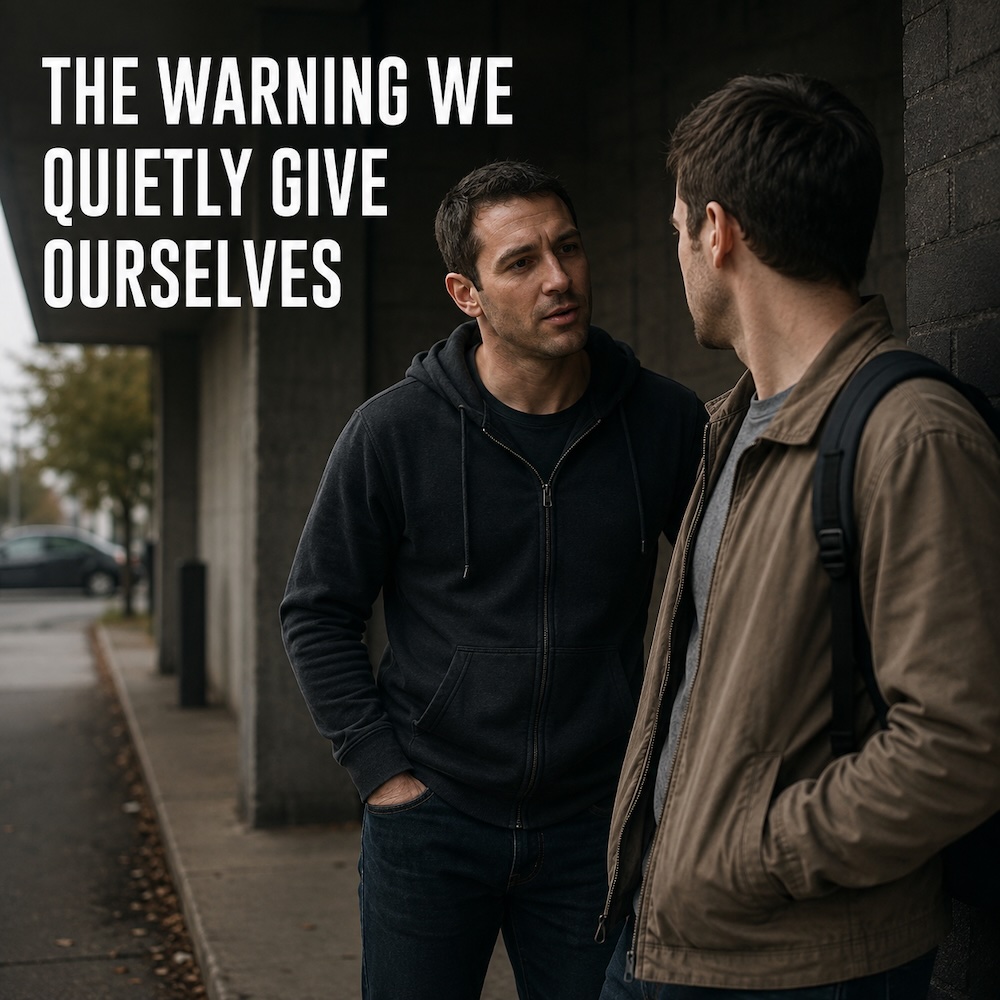
The warning we quietly gave ourselves before anything happens.
Help Keep Applied Methods Free
Applied Methods is independently written and freely available. If you enjoy the articles and would like to support the continued writing and upkeep of the site, contributions are always appreciated, but never expected.