
What does a dojo creed mean if we don’t live by it?
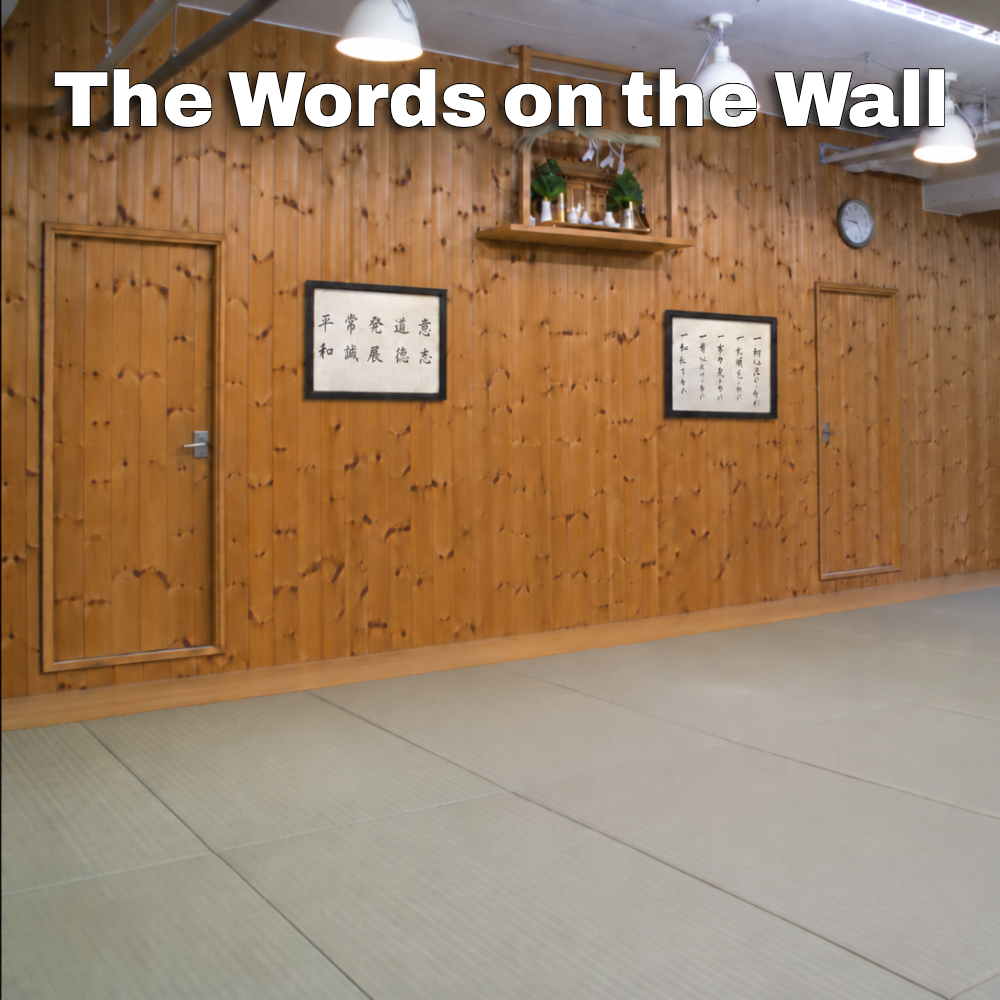
Most traditional karate dojos have some form of creed, often referred to as the Dojo Kun (道場訓). A set of principles or ideals, sometimes displayed on the wall and recited as part of the opening or closing formalities.
Respect. Humility. Honesty. Perseverance. The pursuit of perfection.
All admirable qualities, of course. But I sometimes wonder how much thought we give to what those words actually mean.
It’s easy enough to recite a few sentences, bow respectfully and carry on with our training. But what happens when we leave the dojo?
Do those principles go with us, or do they remain behind until the next training session?
A creed is only words until we choose to live by it.
We often hear that karate is about more than punching and kicking, that training should help develop character as well as physical ability. And I think there’s value in that idea. But repeating a set of principles doesn’t automatically make someone honest, humble or respectful. Neither does wearing a black belt, holding a senior grade or having spent decades practicing karate.
Those qualities have to be demonstrated through our actions.
If our dojo creed tells us to respect others, how do we treat people who disagree with us? If it speaks of humility, can we acknowledge when we’re wrong? If it encourages perseverance, do we continue making an effort when things become difficult, or only when someone is watching?
These are fairly simple questions, but perhaps not always comfortable ones. And they apply just as much to instructors as they do to students.
Over the years, I’ve encountered people in the martial arts who speak at length about respect and humility, yet their everyday behavior often tells a different story, particularly when their opinions or authority are questioned.
There’s something rather contradictory about demanding respect from students while showing very little in return.
An instructor can insist on correct etiquette, proper forms of address and the observance of every dojo tradition. There’s nothing inherently wrong with any of that. But if their own behavior contradicts the principles they expect others to follow, what are they actually teaching?
The example we set often carries more weight than the words we recite.
Of course, none of us is perfect. We all lose patience occasionally, make mistakes or say something we later regret. Living by a set of principles doesn’t mean we never fall short of them. It means recognizing when we do, and being prepared to take responsibility.
Sometimes admitting we were wrong is a better demonstration of humility than anything we might recite in the dojo.
I think the real test of these principles often comes in the quiet moments.
How we treat someone when there’s nothing to gain from being courteous. Whether we’re prepared to listen to an opinion we don’t agree with. Whether we keep our word when doing so becomes inconvenient.
Even in training, do you make an honest effort to improve when nobody is paying attention, or do you simply go through the motions when your instructor isn’t watching?
And none of this requires a dojo, a uniform or a belt around your waist. Someone who has never stepped onto a dojo floor may demonstrate greater honesty, humility and respect than a person who has spent a lifetime training.
Karate doesn’t give us exclusive ownership of these qualities.
I see nothing wrong with displaying a Dojo Kun or reciting it as part of our training. In fact, I think there’s value in taking a moment to remind ourselves of the principles we’re supposed to uphold.
The difficulty comes when reciting the creed becomes nothing more than a routine. Something we do because it’s always been done, without giving much consideration to what we’re actually saying.
Perhaps the next time you recite your dojo creed, it’s worth asking yourself whether you’re making a genuine effort to live by it.
The words on the wall don’t define your character. Your actions do.
Help Keep Applied Methods Free
Applied Methods is independently written and freely available. If you enjoy the articles and would like to support the continued writing and upkeep of the site, contributions are always appreciated, but never expected.

This is interesting, because no dojo I’ve ever trained in had a dojo creed posted. We were absolutely expected to live by certain principles, but they weren’t posted on the wall and we didn’t mouth them.
Interesting, because my experience has been quite different. I’ve trained and taught in several countries over the years, and every dojo I’ve encountered has recited a Dojo Kun. But that really is the point of the article. Whether the principles are displayed, recited or simply understood, what matters is whether we actually live by them. I don’t see anything wrong with reciting them as part of dojo tradition.
A very interesting article here. I have trained in a dojo where we were asked to recite the dojo Kun in Japanese after every training session. Even though it was followed by an English translation the words only sounded like a beautiful chorus.
The words began making more sense when I was assigned some leadership roles in the dojo. And I realized you can easily live by the dojo Kun if you maintain a “beginner”/learner version of you at every level of growth.