When experience outside karate helps us recognize what may already have been there.
A highly ranked karate instructor recently said to me after reading one of my articles, that you have to have experience in judo and jujitsu in order to see the throws and locks that are prevalent in karate to be able to teach them.
When I began training in the 1970s, throws, locks and controlling techniques were simply part of what we learned. Nobody said, “This comes from jujitsu”, or “This is really a Judo technique.” It was just how we trained.
As a young student I knew very little about karate history at the time. And the techniques weren’t presented as something borrowed from another method. They were simply part of what was being taught.
So where along the way did we reach the point where someone can say that you need experience in another martial art to recognize these things in the karate you are practicing?
Maybe it’s that many people just stopped teaching them.
If someone grows up in an environment where almost everything is explained as punching, kicking, blocking, sparring and competition, then naturally that becomes the way they see the techniques. They can practice for years and become extremely proficient, but they are still interpreting those techniques through the same narrow lens.
Then perhaps if they spend some time in judo or jujitsu school as an example, and suddenly they recognize something familiar.
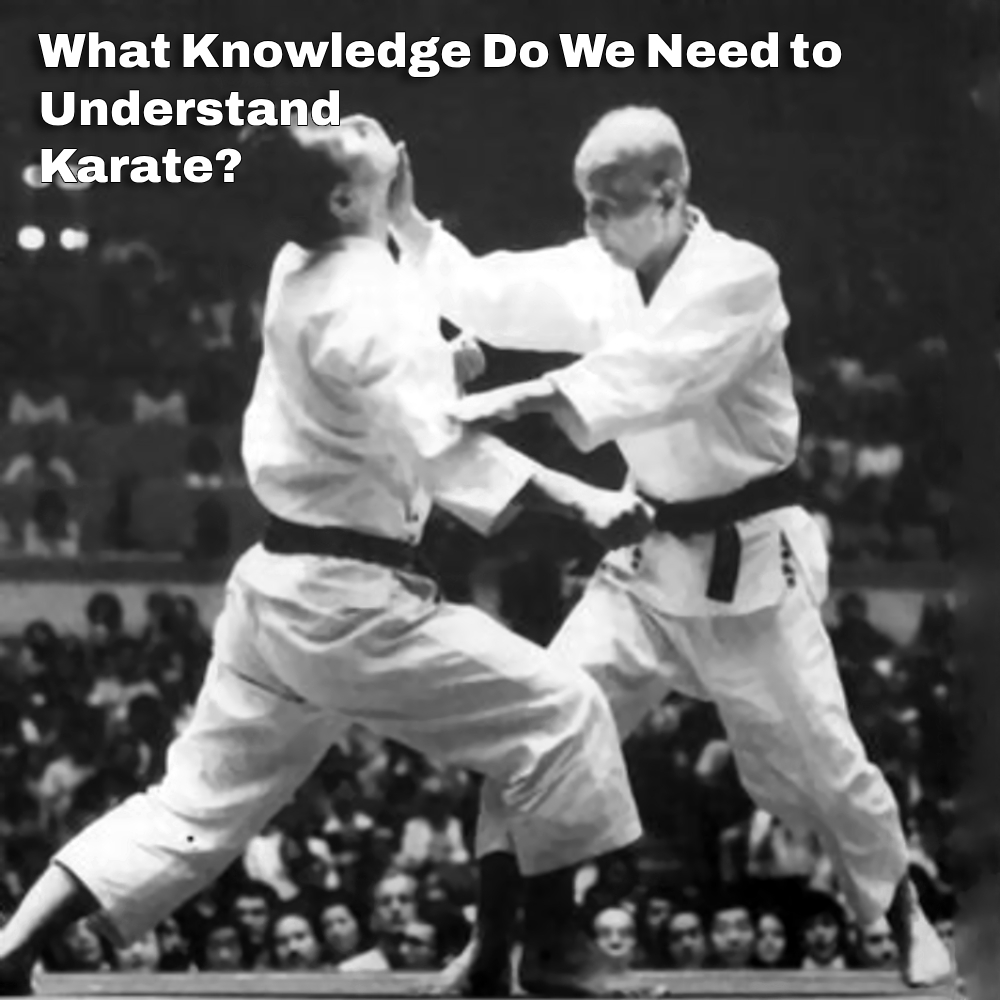
A movement that had always been called a block now looks capable of controlling an arm. Or a stance begins to make sense as part of disrupting someone’s balance. And ‘hikite’ looks completely different when part of another person’s limb is actually attached to it.
If throws, locks and controlling methods are part of karate, why should we have to leave karate to learn enough about them to recognize them?
I don’t mean that we shouldn’t cross-train. Far from it. Learning from other systems can be extremely useful, and a lot of fun.
But there is a difference between learning something useful elsewhere and needing another martial art to explain your own.
Years ago, nobody had to tell me that a throw we were practicing had been borrowed from judo. We practiced the throw. Or that controlling someone’s arm was really a jujitsu idea that had somehow found its way into karate.
It was simply part of our training.
I think part of the problem is the way karate moved away from civilian self-protection and toward preserving karate that developed in the early 20th century. What most people call traditional karate. The movements and techniques may still be there from the earlier version, but the experience that once explained them has disappeared.
And maybe with each generation of instructors, it’s easy for an explanation to become narrower. If an instructor only knows a movement as a block, that is what the next generation will be taught. Eventually someone encounters another martial art, looks back at the same movement and sees possibilities that seem completely new. But they aren’t new at all.
I believe it’s important that you don’t look at history through the wrong end of the telescope. We shouldn’t assume that every throw or lock we see in karate must have been borrowed from somewhere else simply because similar methods exist elsewhere, and because we haven’t been exposed to them ourselves.
In some cases, perhaps what has been lost is not the technique, but the way it was taught.
Help Keep Applied Methods Free
Applied Methods is independently written and freely available. If you enjoy the articles and would like to support the continued writing and upkeep of the site, contributions are always appreciated, but never expected.