On the influence of our teachers and the paths we follow.
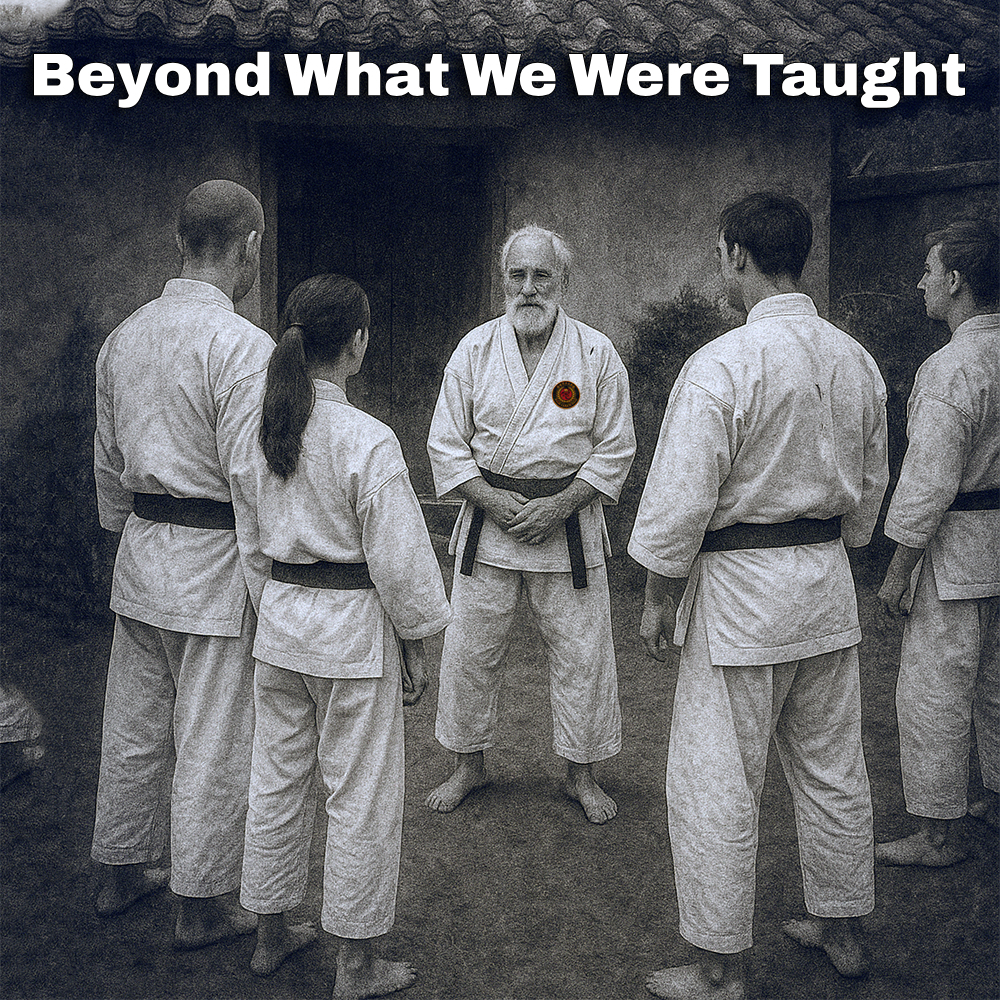
When I first started karate, I practiced what I was shown. If my instructor told me to stand a certain way or perform a movement in a particular manner, that’s what I did. I didn’t have the experience to judge whether there might be another way, and to be honest, I didn’t give it much thought.
That’s how most of us begin. We trust the person teaching us, and there’s nothing particularly wrong with that. We need somewhere to start.
But surely, as the years go by, something should change.
I’ve noticed that some senior instructors regularly refer to the people who taught them, particularly when explaining why they perform something in a certain way. Often, these are well-known and highly respected teachers, and sometimes the impression I get is that mentioning their teacher’s name should be enough to settle the matter.
But does it?
There’s nothing wrong with acknowledging our teachers. I have enormous respect for those who helped me along the way, and I wouldn’t be doing what I do today without their influence.
However, there’s a difference between explaining where we learned something and explaining why we do it.
Over the years, I’ve learned from a number of different teachers. Some of what they taught me I still practice and teach today. Other things I’ve looked at again, questioned, or approached differently as my own understanding has developed.
I don’t see that as rejecting their teaching. Quite the opposite. What I learned from them gave me something to build upon.
I’ve also been fortunate to have teachers who encouraged me to explore my own ideas alongside what they taught. There was no expectation that I should spend the rest of my life doing everything exactly as they did. I could follow my own interests, examine different approaches, and reach my own conclusions.
And I valued that enormously.
I think this is something we should consider when teaching our own students. We spend years helping them learn what we know, but are we expecting them to become copies of ourselves? Do we want them to repeat our explanations for the next thirty or forty years, or would we rather they understood enough to think things through for themselves?
There may come a time when a student disagrees with something we’ve taught. Perhaps they’ve discovered another approach, or perhaps their experiences have led them to a different conclusion.
That doesn’t necessarily mean they’re right. Their ideas still need to stand up to scrutiny, just as ours should. Changing something simply to be different doesn’t demonstrate greater understanding.
But neither does continuing to do something simply because that’s how we’ve always been taught.
If a student, or instructor, can only explain something by telling us who taught it to them, have they really understood it?
I don’t believe that developing our own understanding means leaving our teachers behind. We can respect them, remain grateful for what they’ve given us, and still arrive at different conclusions.
And I don’t see why a teacher should feel they’ve lost something when a student begins to find their own way.
After all, isn’t that part of what we’re supposed to be teaching them?
What we learn from our teachers should become the foundation of our understanding, not the limit of it.
Help Keep Applied Methods Free
Applied Methods is independently written and freely available. If you enjoy the articles and would like to support the continued writing and upkeep of the site, contributions are always appreciated, but never expected.